
Spotlight On Sobriety 03/01/2026

In this week's publication:
Click the link below to jump to that section:
Pride and Recovery: Marching with Purpose
Members March AA Anniversaries
Spotlight On Sobriety 03/01/2026
Join GaL-AA (It's Free) Click Here
PDF Version:
Pride and Recovery: Marching with Purpose
How LGBTQ+ Alcoholics Celebrate Both Sobriety and Identity

For decades, LGBTQ+ people in Alcoholics Anonymous have found strength, healing, and liberation not only in sobriety but also in embracing who they are. Recovery and Pride share a common heartbeat: courage, authenticity, and the willingness to live truthfully. In recent years, LGBTQ+ AA groups, roundups, and fellowship communities have stepped forward with renewed visibility—marching in Pride events, hosting sober celebrations, and showing the world that LGBTQ+ people in recovery live with purpose, dignity, and joy.
This article explores that intersection: What it means to be both sober and proud, and how LGBTQ+ AA groups have carried the message of recovery into the wider world.
A Legacy of Visibility and Courage in Alcoholics Anonymous
LGBTQ+ people have been part of AA since its early days, even when society forced many
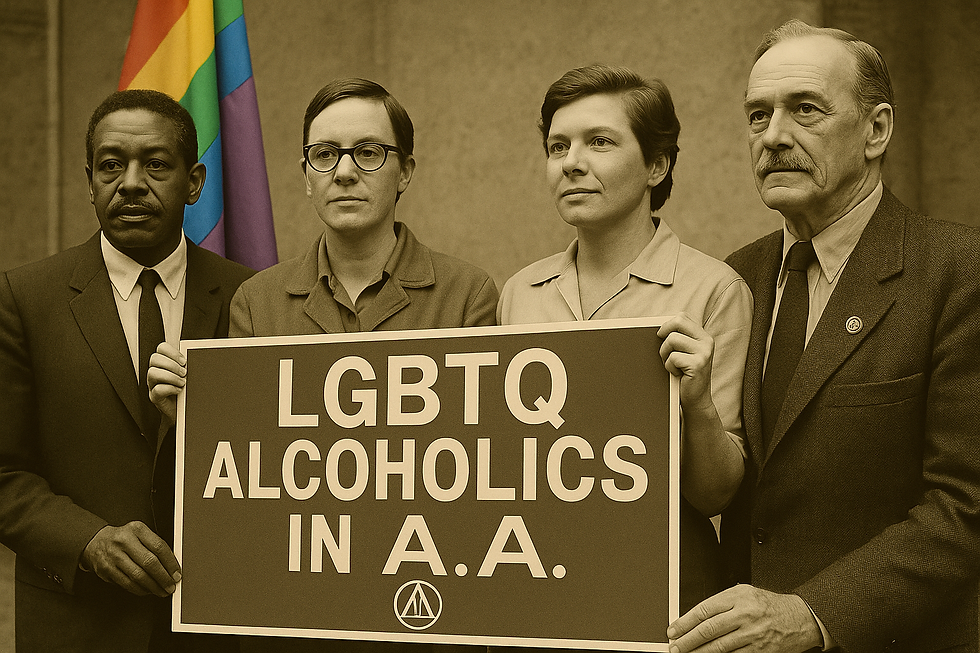
to hide their identities. As equality movements gained momentum, LGBTQ+ AA groups began emerging across the country. Today, hundreds of meetings across the U.S. and internationally identify openly as gay, lesbian, bisexual, transgender, and queer–affirming.
The most direct AA reference on this topic is the official Alcoholics Anonymous pamphlet “LGBTQ Alcoholics in A.A.” (P-32, © A.A. World Services). It acknowledges both the historical challenges and the essential value of safe, identity-affirming meetings. It tells the stories of sober LGBTQ+ members who struggled with shame, stigma, or rejection and found healing through the fellowship of AA. The pamphlet also makes clear that A.A’s primary purpose and inclusiveness extend to all who suffer from alcoholism, regardless of sexual orientation or gender identity.
From the pamphlet:
“A.A. offers a safe place for anyone to find recovery… including LGBTQ alcoholics who may feel isolated or uncertain where they belong.” (Alcoholics Anonymous World Services, “LGBTQ Alcoholics in A.A.,” P-32)
This emphasis on belonging lays the foundation for why LGBTQ+ AA groups continue to step into the public square—offering representation, safety, and hope.
Why LGBTQ+-Specific Recovery Spaces Matter
Studies consistently show that LGBTQ+ individuals experience higher rates of alcohol-use disorders than the general population. Research published in Substance Abuse Treatment, Prevention, and Policy (2023) notes that LGBTQ+ individuals report greater barriers to treatment and benefit significantly from identity-affirming recovery programs.
Counselor Magazine similarly highlights the importance that LGBTQ+-specific 12-Step meetings create environments where members can share openly without fear of judgment. These spaces help reduce isolation, normalize lived experiences, and build a sense of shared culture around recovery.
Many members of LGBTQ+ AA groups describe these meetings as the first place they were able to show up and share fully—sober and queer—without having to leave part of themselves at the door. Authenticity allows for deeper honesty, stronger community, and more effective recovery.
Pride as a Celebration of Recovery

In recent decades, LGBTQ+ AA groups have become more visible at Pride events worldwide. Many cities include Sober Pride Zones, recovery floats, or AA contingents marching together. These groups reflect an important message: sobriety is not a limitation; it is part of queer liberation.
Organizations like The Sober Curator and various LGBTQ+ recovery networks document how queer sober individuals are reclaiming Pride celebrations in ways that honor recovery—through sober dances, meditations, fellowship circles, and marches.
For many, marching in Pride as sober members in recovery is a deeply meaningful milestone. It signals healing from old wounds—shame, rejection, internalized stigma, or painful histories around addiction. At the same time, it offers a public demonstration that recovery can be joyful, vibrant, and fully aligned with LGBTQ+ identity.
One sober member beautifully stated in an interview:
“I marched in Pride for years, but the first time I marched sober, I felt like I was actually present for my own life.”
Sobriety does not take people out of the LGBTQ+ community; it roots them more deeply in it.
Service: Carrying the Message with Pride
LGBTQ+ AA groups have long been involved in service—hosting Roundups, sponsoring newcomers, organizing workshops, and participating in local service structures. But Pride participation offers an additional form of service: public outreach that reaches the still-suffering alcoholic who may believe AA is not a place for people like them.
The AA pamphlet, P-32, emphasizes the importance of representation and visibility:
“Seeing other LGBTQ people sober showed me that recovery was possible for me too.”
This visibility is lifesaving. Many LGBTQ+ alcoholics hesitate to seek recovery because of past trauma in traditional or religious environments. By being present at Pride—smiling, sober, unified—recovery groups and clubhouses that host AA meetings offer a message that can cut through fear and stigma.
A Community Marching Toward Healing
Pride and recovery are both forms of rebirth. They are declarations that we deserve to live

with dignity and authenticity. LGBTQ+ AA groups embody this truth each time they gather, support one another, and step into the world with clear eyes and open hearts.
To march with Pride as a sober LGBTQ+ person is to celebrate not just identity, but freedom—freedom from alcohol, freedom from shame, freedom to be who we were always meant to be.
No one has to walk this path alone. The LGBTQ+ members of Alcoholics Anonymous . have walked it before, continue to walk it today, and stand ready to welcome the next person seeking hope.
Written by:
Steve N.
Las Vegas, NV.
Members March AA Anniversaries

To add or edit your sobriety date, click on the link in the email you received from us. It is in the footer of the email where it says “update your preferences”. If you are not an email registered member yet, please click here to sign up.

Spotlight On Sobriety 03/01/2026
The Spotlight On Sobriety 03/01/2026 features personal stories, articles, and reflections submitted by members and friends of the fellowship. The views expressed are those of the individual authors and do not necessarily represent those of Alcoholics Anonymous or GaL-AA.
Statement of Inclusion
GaL-AA exists to serve lesbians, gays, bisexuals, transgender people, queers and others in Alcoholics Anonymous regardless of how they self-identify. GaL-AA embraces all members of the AA Fellowship.
Your GaL-AA Newsletter Team


